Our work

What we’ve built, and what we build

A real contractor’s site first, then two before-and-afters showing what changes when an old one is rebuilt. Every one is on a desktop screen and on a phone, because the phone is where the old ones fall over.

Which of these are real

Two of them. DLC Utility Group and Pin & Paper are sites we actually built, and those are photographs of them.

The two before-and-afters in the middle are demonstrations, not clients. Rather than borrow someone else’s work or invent a testimonial, we built sample sites for made-up businesses. Every screen in those is drawn in the browser rather than photographed. As more real builds go live they will take the samples’ place — DLC has already replaced one.

Real work

A site we built for a working contractor

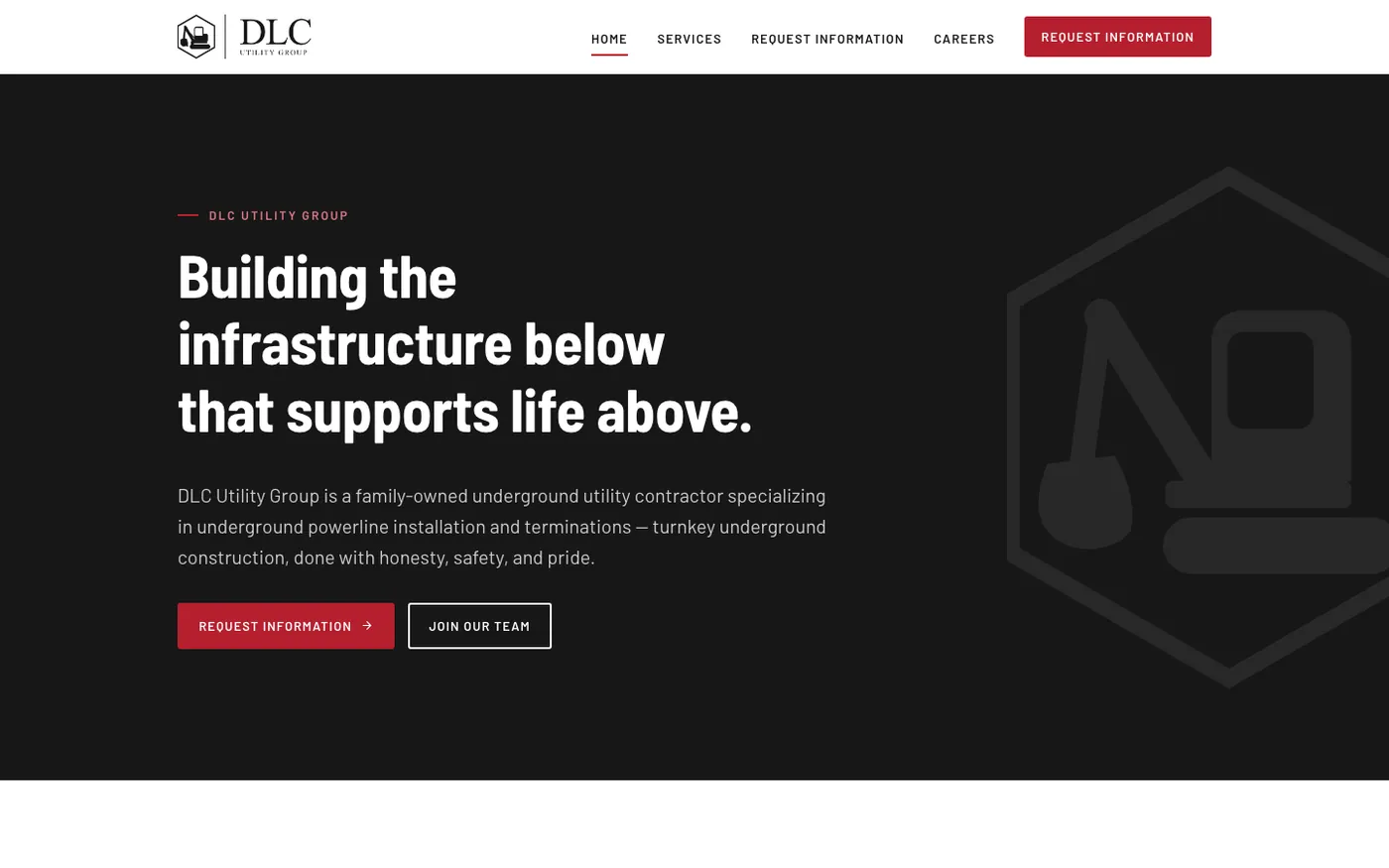
DLC Utility Group lay underground powerline across Northwest Georgia and the Southeast. Until now the whole company lived on a Facebook page.

DLC Utility Group

Underground utility contractor · Cedartown, GA

Real buildBuilt — launching shortly
BeforeA Facebook page and nothing else — no address of their own, and nowhere to put a page per service or per town.
a Facebook page — no website
AfterA site on their own domain, with the work, the service area and two ways in — one for customers and one for crew.
dlcutilitygroup.com
The DLC Utility Group home page on a desktop screen: a dark hero with the headline “Building the infrastructure below that supports life above,” a short description of the company, and two buttons — Request Information and Join Our Team.
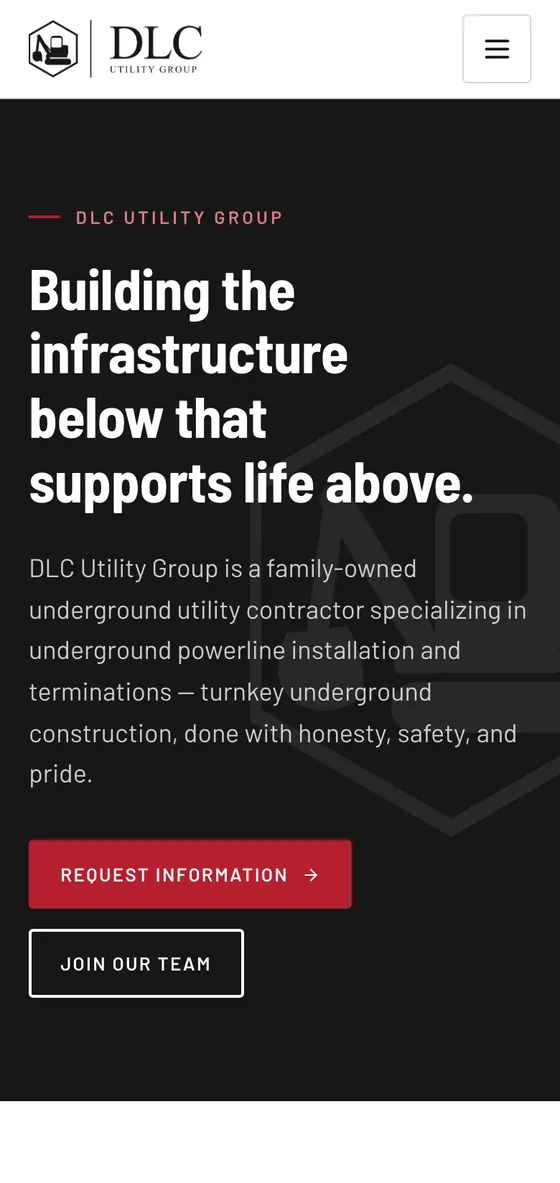
The same page on a phone: the logo and a menu button at the top, the headline reflowed across four lines, the full description readable without pinching, and the two buttons stacked at full width.

And the same site on a phone, which is where a foreman standing in a field is going to open it. Nothing to pinch, and the two things anyone came for are buttons.

What it does

  • Two doors, not one. “Request information” is for customers and “Join our team” is for crew, both in the first screen — for a contractor, filling the crew is as urgent as filling the schedule, and most contractor sites forget it entirely.
  • SEOThe service area is stated outright — local to Northwest Georgia, travelling the greater Southeast — rather than left for someone to guess. It is the first thing a project manager checks and the thing Google needs in order to match you to a place.
  • It is theirs. The domain is registered in their name, and the site does not sit at the mercy of an account that can be restricted or lost. The Facebook page carries on doing its own job alongside it.

Sample builds

Two more situations we see constantly

Both of these are demonstrations rather than clients — made-up businesses standing in for the two ways an existing site usually fails: it was built before phones mattered, or Google cannot read it.

Vance Family Dentistry

Dental practice · Toledo, OH

DemoSample build — illustrative, not a real client.
Device view for Vance Family Dentistry
BeforeBuilt in 2011 for a desktop screen and never touched since. Fixed width, no certificate, and a “Patient Forms” link that has gone nowhere for years.
Not securevancefamilydentistry.example
AfterCalm and readable, with the new-patient form up front, the insurance list in plain sight, a page per service and the staff introduced by name.
vancefamilydentistry.example
BeforeBuilt in 2011 for a desktop screen and never touched since. Fixed width, no certificate, and a “Patient Forms” link that has gone nowhere for years.
AfterCalm and readable, with the new-patient form up front, the insurance list in plain sight, a page per service and the staff introduced by name.

What changed, and why

  • Readable on a phone without pinching, and the phone number is a tap rather than a thing you copy out by hand. Most people arriving here are on a device the old site was never built for.
  • SEOOne page each for cleanings, whitening and implants, plus a structured summary of the hours, address and service area that Google reads directly.
  • The “Patient Forms” link that had been broken for years now opens a form you can fill in before you arrive — and the site has a security certificate, so browsers stop warning people off.

Sundial Coffee Roasters

Small-batch roaster and café · Portland, ME

DemoSample build — illustrative, not a real client.
Device view for Sundial Coffee Roasters
BeforeOne page, and the menu on it is a photograph of a printed menu — too small to read on a phone, and just a picture as far as a search engine is concerned.
Not securesundialcoffee.example
AfterA real text menu, the hours where you can find them, the roasting story, and wholesale given a page and a form of its own.
sundialcoffee.example
BeforeOne page, and the menu on it is a photograph of a printed menu — too small to read on a phone, and just a picture as far as a search engine is concerned.
AfterA real text menu, the hours where you can find them, the roasting story, and wholesale given a page and a form of its own.

What changed, and why

  • SEOThe menu was a photograph, so Google could not read a word of it. It is real text now — every drink and every bag of beans is something a search can actually find.
  • The hours and the address are on the page and in a format Google reads directly, so they carry through to the map listing as well.
  • Wholesale has its own page and its own form, because a café buying beans by the sack and somebody looking for a flat white want completely different things.

Also built by us

Not everything we build is a small business website

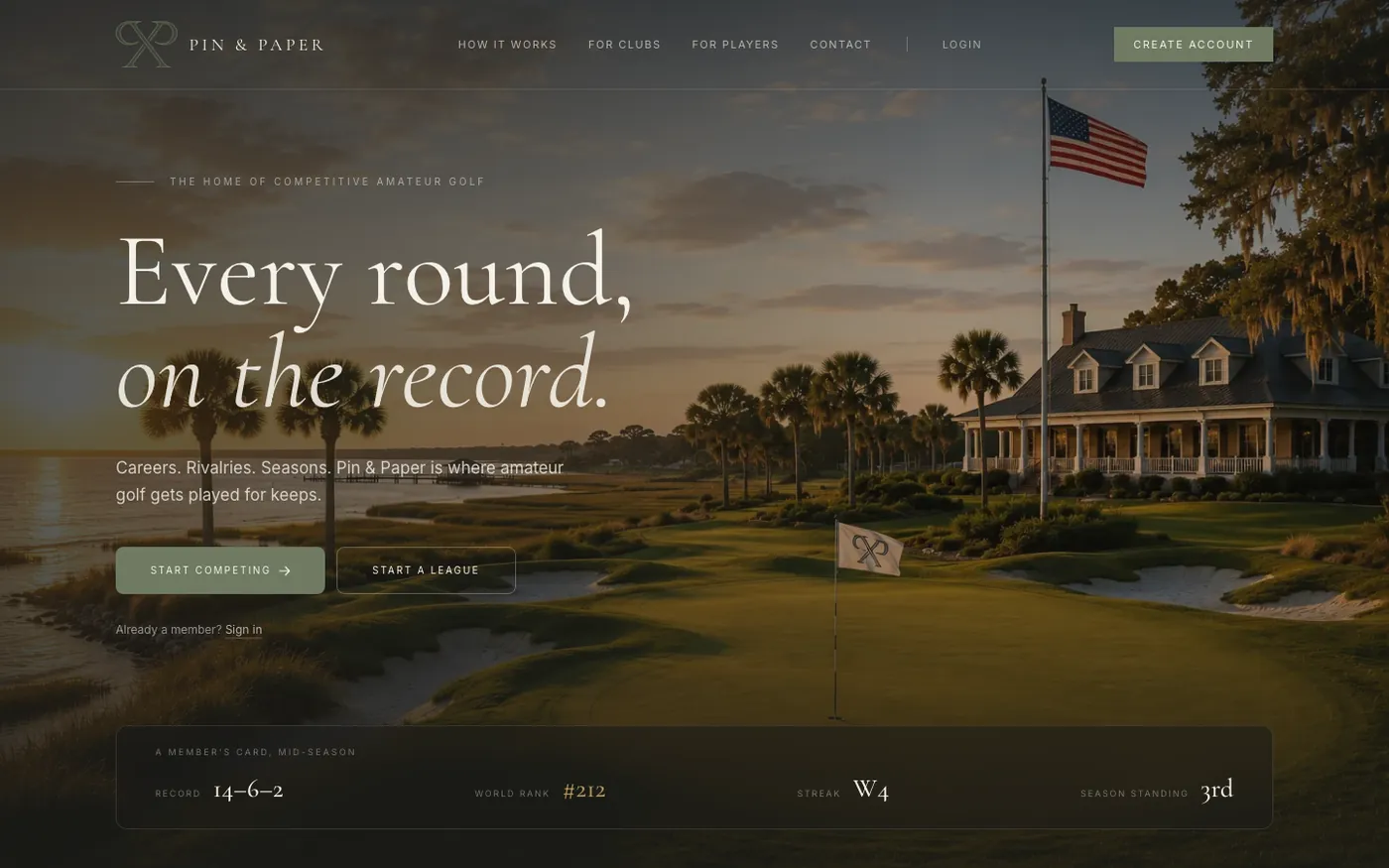
Pin & Paper is a real, live product — a platform for competitive amateur golf, with player careers, league seasons, head-to-head records and world rankings. It is a far bigger piece of software than anything above, and it is on this page for one reason only: the same hands build the $500 sites.
pinandpaper.co
The Pin & Paper home page on a desktop screen: a full-width photograph of a coastal golf course at sunset, with the headline “Every round, on the record” and a member's scorecard along the bottom.
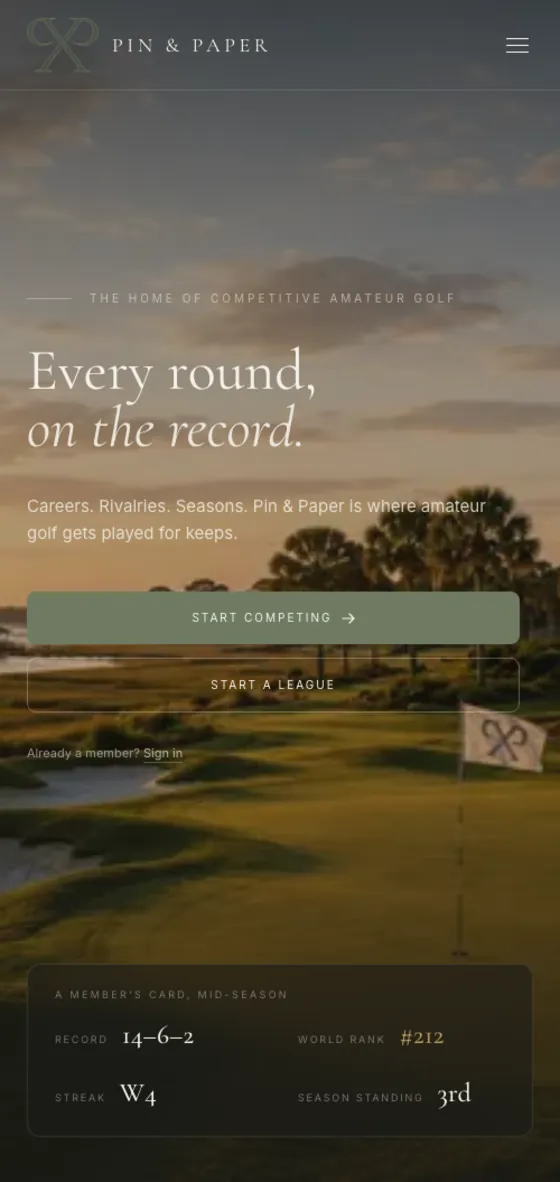
The same Pin & Paper page on a phone: the photograph fills the screen, the headline reflows to fit, and the two buttons stack full width.

Why it’s here, and what it isn’t

It would be misleading to put this in the list above. Pin & Paper took months, not two weeks, and it is not what $500 buys — that buys the kind of site at the top of this page, which is the right thing for almost every business that comes to us.

What it does show is the standard: typography, photography, and a layout that holds together on a phone as well as it does on a desk. Your site gets built by the people who built this one.

Go and look at it yourself →

Yours could be next

$500 to build it, $24.99 a month to keep it running, live in two weeks. Tell us what you do and we'll tell you what we'd build.